The autonomous vehicle industry has reached an inflection point. Two companies — Waymo and Tesla — are pursuing radically different strategies to put self-driving cars on public roads at scale. But while most coverage focuses on the software and sensor debates, a less visible battle is playing out beneath the surface: the fight to build the physical infrastructure that autonomous fleets require to operate.
Depots, charging stations, maintenance bays, remote operations centers — these are the “real estate” of autonomy. Waymo’s depot-heavy expansion contrasts with Tesla’s in-house fleet scaling (now transitioning from existing Superchargers and Service Centers to purpose-built “Mothership” hubs as the Cybercab enters production). Both paths create real infrastructure demands. This article examines both through a data-driven, infrastructure-first lens, drawing on Obi’s pricing data, Waymo’s public filings, academic literature, and industry reporting.
Section 01
Fleet Scale & Deployment: A Reality Check
The gap between Waymo and Tesla in terms of actual fleet deployment is significant. Waymo currently operates approximately 2,500–3,000 autonomous vehicles across multiple U.S. cities (sources vary), completing an estimated 400,000–450,000 weekly paid rides as of late 2025/early 2026 data, and is on track for over 1 million weekly rides by end of 2026.[1] These are fully driverless trips — no safety driver behind the wheel — running 24 hours a day in complex urban environments including San Francisco, Phoenix, Los Angeles, Austin, and Atlanta.
Tesla, by comparison, launched its supervised robotaxi service (with safety monitors) in Austin in June 2025 and expanded to the San Francisco Bay Area shortly after.[2] As of March 2026, community trackers show approximately 400 active Tesla robotaxis — roughly 355 in the Bay Area and 45 in Austin[14] — though Tesla’s own CPUC filings indicate 1,655 vehicles registered for supervised operation in California alone, suggesting substantial capacity that hasn’t yet been activated.[15] The gap between registered and active vehicles is a recurring point of debate. The current active fleet primarily consists of company-owned modified Model Ys, with unsupervised operation still limited to a handful of vehicles in Austin (as few as 4–8 active unsupervised units as of mid-March 2026).[16] Meanwhile, over 25–30 Cybercab test units have been spotted at Giga Texas, with the first production unit rolling off the line in February 2026 and mass production targeting April 2026.[17]
Fleet Deployment Comparison: Waymo vs. Tesla
Active vehicles in service, early 2026
Sources: Waymo public statements; Basenor Robotaxi Tracker (Mar 2026); Tesla CPUC filings; Teslarati/drone footage
Waymo: ~2,500–3,000 vehicles, 400K–450K rides/week, fully driverless. Tesla: ~400 active (1,655 registered in CA), supervised, with Cybercab mass production launching April 2026. Waymo’s fleet is 6–7x larger — and fully autonomous, driving fundamentally different infrastructure requirements.
Where Each Company Operates
Waymo
San Francisco, Phoenix/Tempe, Los Angeles, Austin, Atlanta — with Miami, Washington D.C., and additional cities in the pipeline.[4]
Fully driverless (SAE Level 4) in all operating cities. 24/7 service availability.
Tesla
Austin and San Francisco Bay Area as of early 2026, with Elon Musk’s stated target to expand to 25–50% of the U.S. by end of 2026, pending regulatory approvals for unsupervised operation.[3]
Safety monitors present in nearly all vehicles. FSD (Supervised) designation — limited unsupervised trials in Austin; full autonomous approval not yet granted in most markets.
Section 02
The Depot Question: Physical Infrastructure Behind Autonomous Fleets
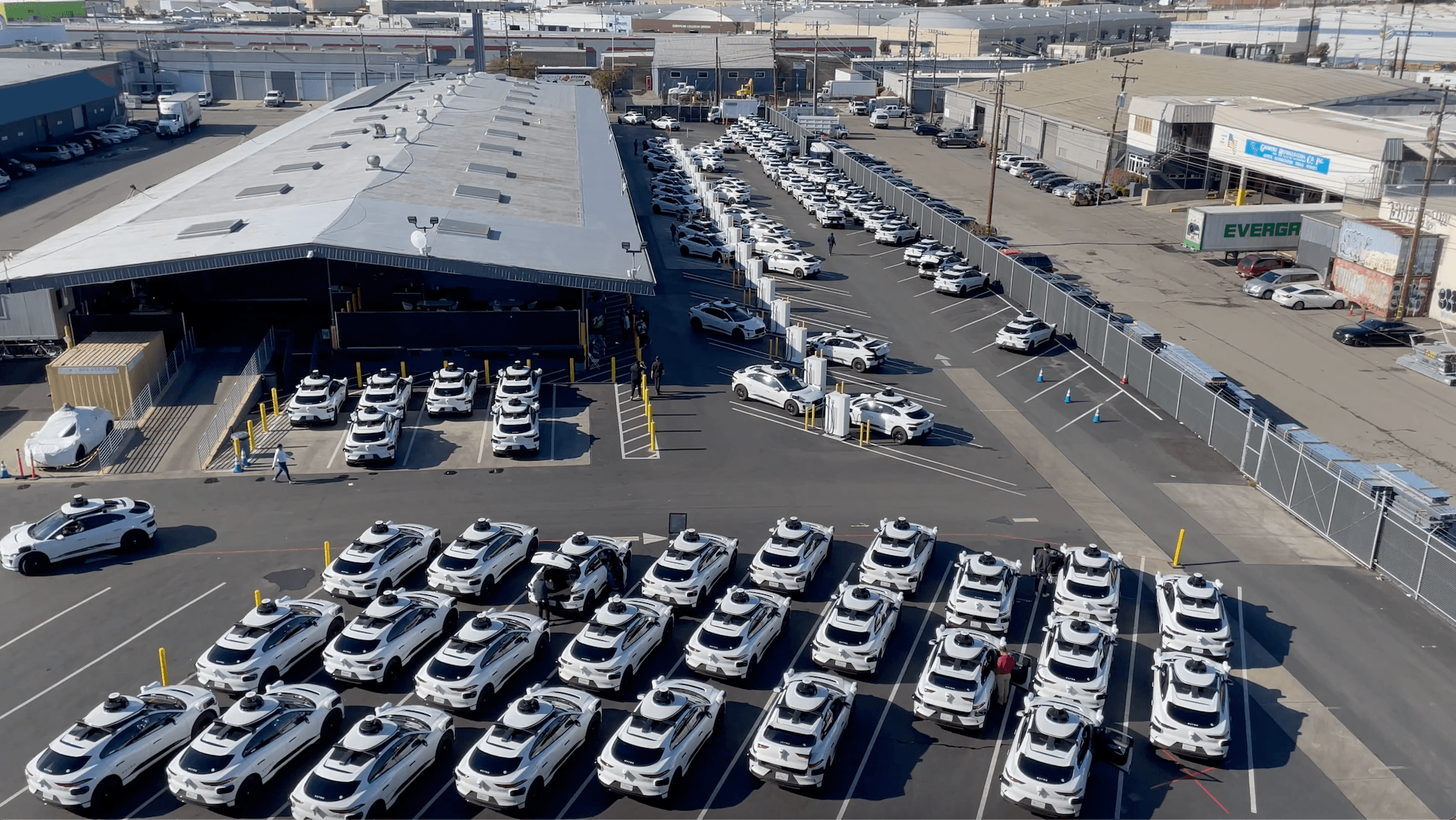
When a Waymo vehicle finishes its shift, it doesn’t park in someone’s garage. It returns to a depot — a purpose-built facility where vehicles are charged, cleaned, inspected, and maintained. In December 2025, Business Insider published a detailed look inside Waymo’s largest depot in San Francisco, offering one of the first public glimpses into what the operational backbone of an autonomous fleet actually looks like.[5]
Inside Waymo’s San Francisco Depot
The facility houses hundreds of Jaguar I-PACE vehicles and operates around the clock. Key functions include vehicle charging (a mix of Level 2 and DC fast chargers), automated and manual cleaning, sensor calibration and hardware inspection, tire and brake servicing, software updates, and remote assistance operations. Staff work in shifts to ensure vehicles are turned around and back on the road within hours.[5]
This is the part of autonomy that most investors and analysts overlook. Every city Waymo enters requires a comparable facility — real estate that must be leased or purchased, outfitted with high-amperage electrical service, and staffed with trained technicians. The Skogsmo-Beiker 2025 academic paper on robotaxi deployment explicitly calls out depot infrastructure as one of the most underestimated cost centers in the industry.[6]
Every new city Waymo enters requires a depot facility with charging infrastructure, maintenance bays, cleaning stations, sensor calibration equipment, and 24/7 staffing. This is the “real estate” layer of autonomy — and it doesn’t exist yet in most markets.
Tesla’s “Mothership” Hubs: A Different Kind of Depot
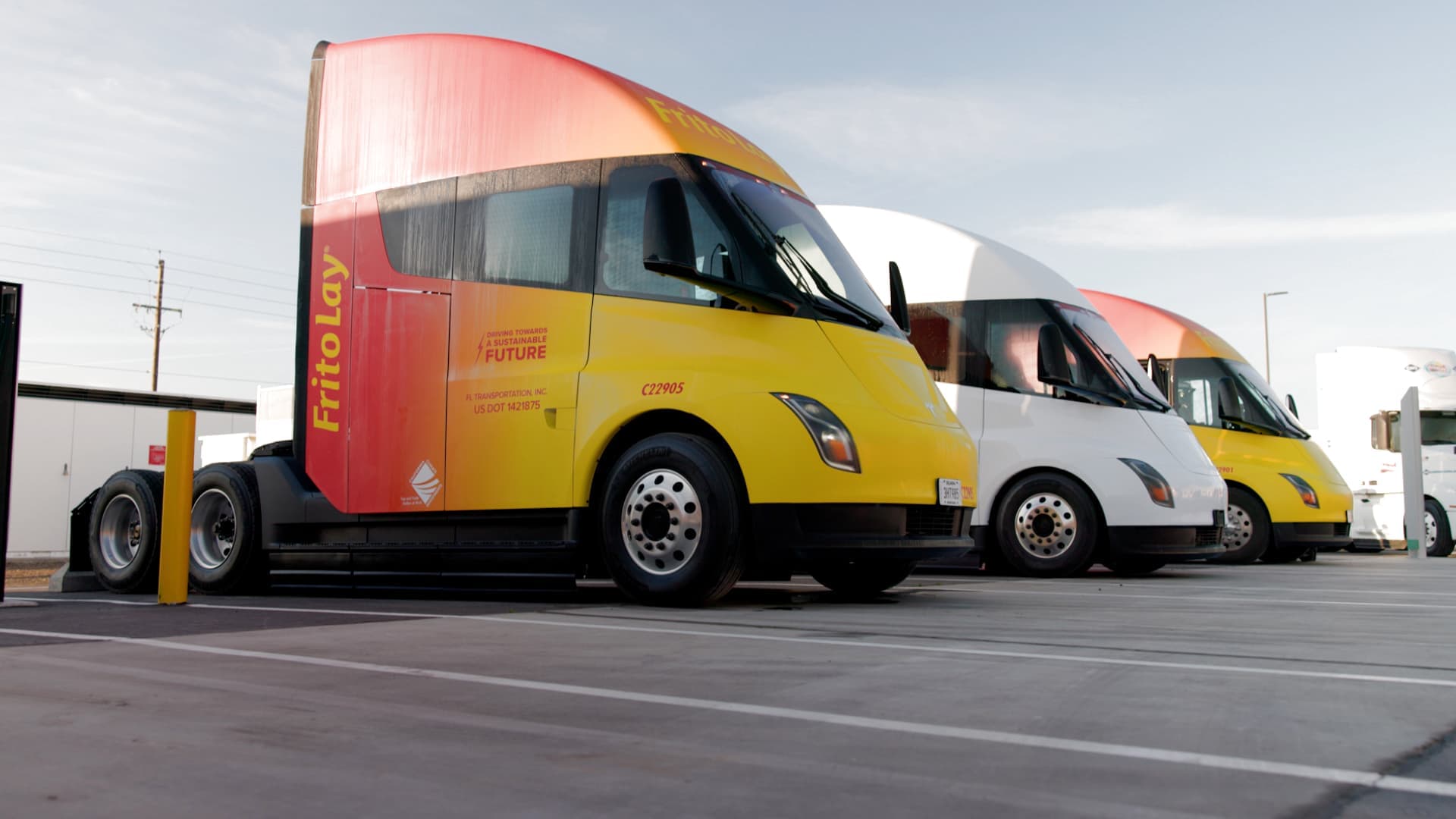
Tesla is building its own version of depot infrastructure — different in form from Waymo’s, but increasingly substantial. While the current Model Y fleet uses existing Service Centers and Superchargers, the Cybercab is driving a new infrastructure buildout. At Giga Texas, drone footage shows a growing staging operation where Cybercabs are charged, cleaned, and prepared for deployment. Tesla calls these “Mothership” hubs — centralized facilities handling charging, automated cleaning (robotic camera washer systems with zero human labor), maintenance, dispatch, and teleoperations.[18][19][20] Tesla has also partnered with Ultrium, an AI-driven predictive maintenance company, to develop autonomous diagnosis and repair capabilities, with Detroit being explored as a pilot hub location.[21]
Functionally, this is converging with Waymo’s depot model — centralized facilities with charging, cleaning, and remote ops — though Tesla is designing for lower labor intensity through automation and wireless charging. The longer-term vision of private Tesla owners opting their cars into the network is planned for later in 2026, but the Cybercab (no steering wheel, no pedals, wireless charging only) cannot function in that distributed model at all. It requires dedicated hub infrastructure by design.
| Infrastructure Element | Waymo (Centralized Depot) | Tesla (“Mothership” Hubs + Existing Network) |
|---|---|---|
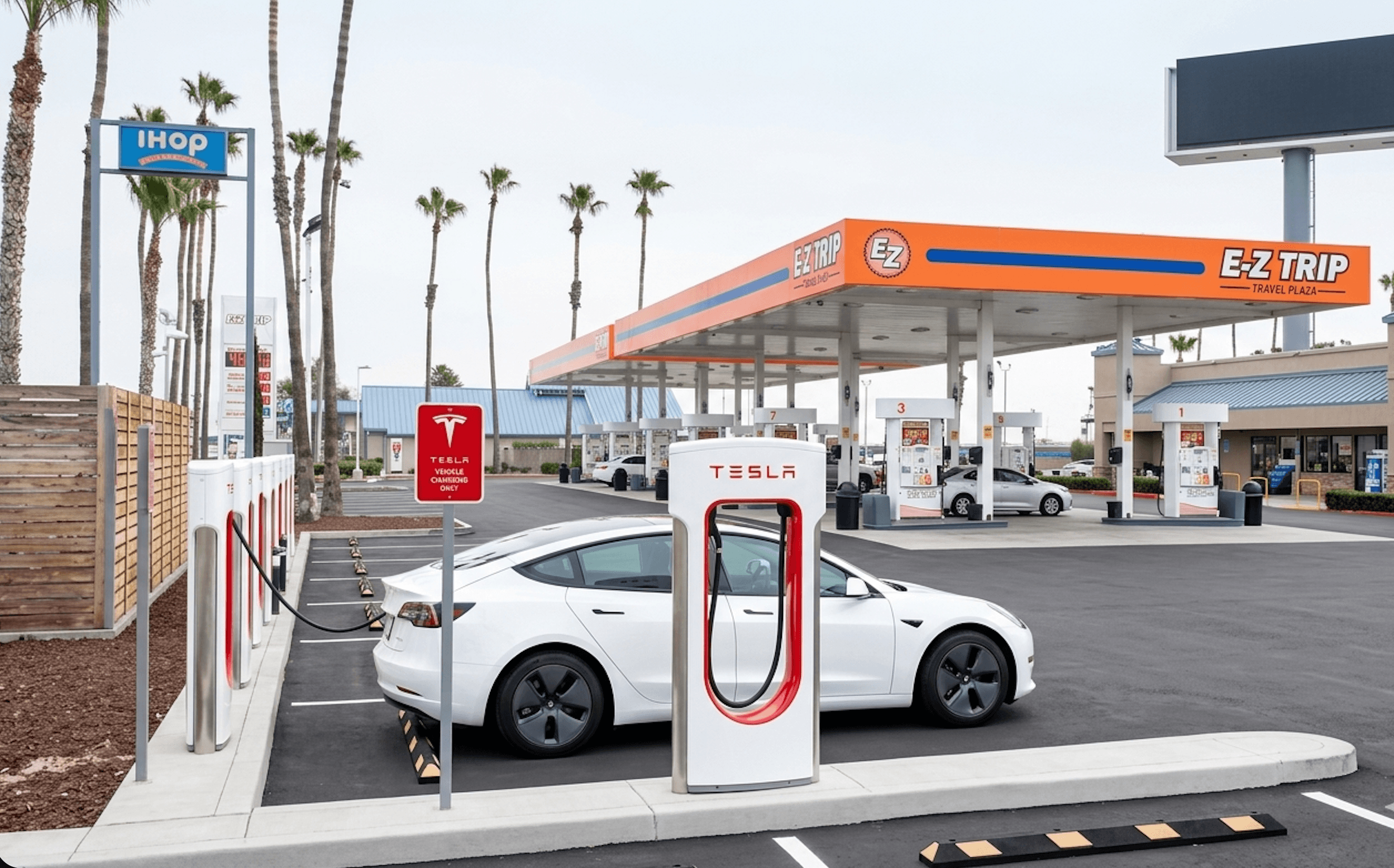
| Charging | On-site L2 + DCFC at depot | Supercharger network (Model Y fleet); FCC-approved wireless charging pads at hubs (Cybercab); dedicated charging at Giga Texas staging area |
| Cleaning | Automated + manual at depot | Robotic automated cleaning at Mothership hubs (camera washers, no-labor turnaround); owner responsibility in future distributed model |
| Maintenance | In-house technicians at depot | Tesla Service Centers + Ultrium AI-powered predictive maintenance; specialized bays for Cybercab (no steering column/pedals) |
| Sensor Calibration | Specialized bay at depot (LiDAR, cameras, radar) | Camera-only system; OTA software updates; robotic camera washer systems at hubs |
| Remote Operations | Dedicated ops center staffed 24/7 | Teleoperations center at Giga Texas; transitioning from in-car safety monitors to remote ops as unsupervised scales |
| Real Estate Requirement | Large industrial facility per city | "Mothership" network hubs (smaller than Waymo depots, higher automation); Giga Texas as central hub; expanding to additional cities as Cybercab deploys |
Section 03
Charging Infrastructure: Who’s Actually Building It
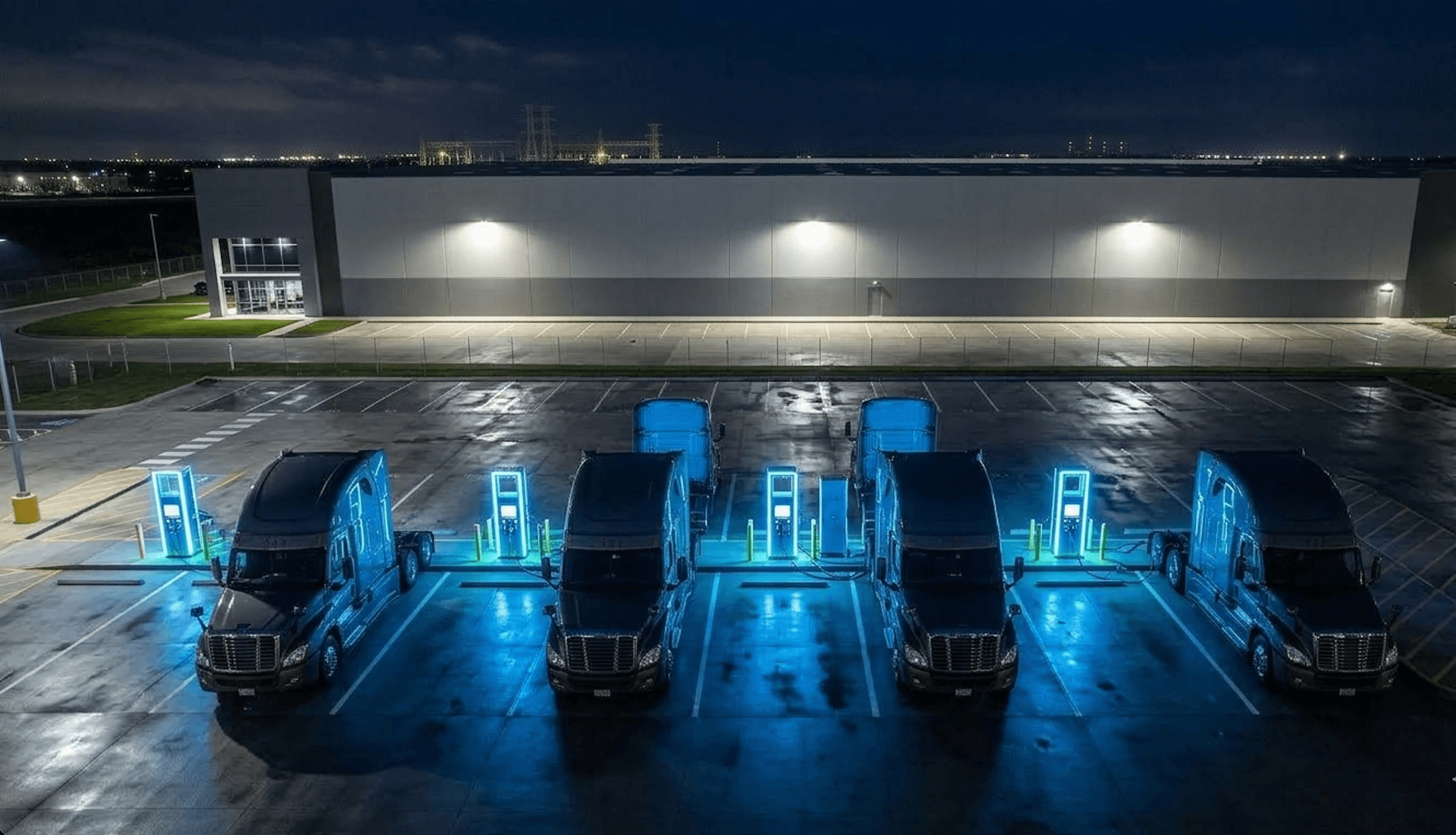
Charging is the single most critical infrastructure bottleneck for autonomous fleets. Every robotaxi must be charged, and unlike human-driven rideshare vehicles that can refuel anywhere, autonomous vehicles need purpose-built, predictable charging infrastructure integrated into their operational workflow.
Uber’s $100 Million Bet
In early 2026, Uber announced a $100 million investment specifically earmarked for building robotaxi charging stations.[7] This is arguably the strongest market signal yet that the infrastructure layer for autonomous fleets is becoming a distinct, investable asset class. Uber isn’t building the robotaxis themselves — they’re building the infrastructure that any robotaxi operator will need to use. It’s a platform play for the physical layer.
Tesla’s Wireless Charging Pivot
In February 2026, Tesla received an FCC waiver for a wireless charging system designed specifically for the Cybercab.[8] This is a significant technical development: wireless charging eliminates the need for a human (or robotic arm) to plug in a cable, which is critical for a vehicle with no human driver. The waiver suggests Tesla is serious about deploying Cybercab at scale, and that the charging infrastructure for that vehicle will look fundamentally different from today’s Supercharger network. For the current company-owned Model Y fleet, Tesla continues leveraging the existing Supercharger network; wireless charging rollout is prioritized for the Cybercab to enable depot-free or low-labor charging operations.
Tesla Abandons SF Charging Site
In a revealing counterpoint, Tesla dropped plans for a robotic charging site in San Francisco that was intended to serve its robotaxi fleet.[9] The reasons aren’t entirely clear, but the timing is notable — Tesla pulled back from building dedicated charging infrastructure in a city where it had just launched robotaxi service. This suggests either a strategic pivot toward wireless/distributed charging, or a recognition that purpose-built charging depots are more expensive and complex than anticipated.
Charging Infrastructure Investments in the Autonomous Fleet Ecosystem
Notable commitments and developments, 2025–2026
Sources: TechCrunch; CleanTechnica; industry reporting
Uber’s $100 million commitment to robotaxi charging stations is a clear market signal: the infrastructure layer for autonomous fleets is becoming a standalone investment opportunity, separate from the vehicles themselves.
The Charger-to-Vehicle Ratio Challenge
The Skogsmo-Beiker 2025 paper highlights a critical operational detail: the charger-to-vehicle ratio.[6] A fleet running 24/7 cannot have every vehicle charging at once — get the ratio wrong, and you either waste capital on unused chargers or create bottlenecks that take vehicles off the road. For a 1,000-vehicle fleet, even small ratio differences translate to millions in infrastructure cost. This challenge applies equally to Tesla’s wireless charging approach as it scales, and it’s the kind of operational detail that separates infrastructure operators from vehicle manufacturers.
Section 04
Scaling Strategies: Geo-Fenced Expansion vs. Software-First
The fundamental strategic divergence between Waymo and Tesla can be distilled to a single question: do you map the world first, or do you teach the car to drive anywhere?
Waymo: City by City, Block by Block
Waymo’s expansion strategy is methodical and infrastructure-intensive. Before launching in any new city, Waymo spends months mapping the area in granular detail, testing vehicles on local roads, engaging with city officials and regulators, and building or leasing a local depot facility.[4] Their February 2025 announcement, “Safe, Routine, Ready: Autonomous driving in five new cities,” outlined their expansion roadmap into Austin, Atlanta, Miami, and beyond — each requiring the same rigorous preparation process.[4]
Waymo is also investing in U.S. manufacturing to support this scaling. Their partnership with Hyundai and contract manufacturer Magna will produce the next generation of Waymo vehicles domestically, enabling faster fleet growth without supply chain dependencies on overseas manufacturing.[10]
Waymo's Scaling Approach
Sensor stack: LiDAR + cameras + radar (sensor fusion)
Mapping: Pre-mapped HD maps required for each city
Expansion pace: ~2–3 new cities per year
Infrastructure per city: Depot + charging + remote ops
Manufacturing: Purpose-built vehicles via Hyundai/Magna[10]
Tesla's Scaling Approach
Sensor stack: Vision-only (cameras, no LiDAR)
Mapping: Real-time neural network; no pre-mapping required
Expansion pace: Musk’s stated target: 25–50% of U.S. by end of 2026, pending regulatory approvals[3]
Infrastructure per city: Leverages existing Superchargers + Service Centers; growing as Cybercab ramps
Manufacturing: Existing factories + Cybercab line at Giga Texas (first unit Feb 2026; mass production April 2026, targeting hundreds/week)[17]
Tesla: Faster Geographic Reach, Growing Infrastructure Needs
Tesla’s vision-only system aims to generalize without city-specific HD maps, enabling faster geographic expansion. But “faster” doesn’t mean “infrastructure-free.” The Cybercab rollout is generating its own buildout: Mothership hubs, a teleoperations center at Giga Texas, and Ultrium’s predictive maintenance partnership.[20][21] Waymo requires large, staffed depots per city; Tesla is building smaller, more automated hubs with robotic cleaning and wireless charging. Both models require real estate, electrical capacity, and capital in every market. As Cybercab production ramps to hundreds per week, Tesla’s infrastructure footprint will grow toward Waymo’s — even if the facilities look different.
Section 05
Pricing & the Economics of Autonomy
The Obi Report (January 2026) provides the most comprehensive side-by-side pricing analysis of autonomous and traditional rideshare services ever published, based on 94,348 rides tracked across the San Francisco Bay Area from November 27, 2025 to January 1, 2026.[2] The data reveals fundamentally different pricing strategies that have direct implications for infrastructure investment.
Average Ride Prices by Provider
San Francisco Bay Area, Nov 2025 – Jan 2026 (n = 94,348 rides)
Source: Obi, "The Cost of Autonomy" Report, January 2026
Tesla: Undercutting the Market
Tesla’s average ride price of $8.17 is 53–59% cheaper than every competitor: Lyft ($15.47), Uber ($17.47), and Waymo ($19.69).[2] At roughly $3.20 per mile (~$1.99/km in Obi’s data), Tesla is less than half the per-mile cost of any rival. Uniquely, Tesla shows no surge pricing — consistent rates across peak/off-peak hours, weekdays, and weekends. This pricing applies to the current supervised service; since March 2026, Tesla has begun shifting to a per-mile structure (~$1–$1.40/mile + base fare).
Current pricing is almost certainly not sustainable. Analysts estimate Tesla’s long-term target is $0.20–$0.40 per mile — roughly 10x lower than current rates.[2] At those levels, every dollar of infrastructure cost (charging, cleaning, maintenance) eats directly into per-ride margins.
Price Per Mile by Provider
Converted from Obi's $/km data (1 km ≈ 0.621 mi)
Source: Obi, "The Cost of Autonomy" Report, January 2026 (original data in $/km)
Waymo: Converging with Incumbents
Waymo’s pricing premium over traditional rideshare has narrowed sharply — now just 12.7% above Uber and 27.3% above Lyft, down from 30–40% in mid-2025.[2] This convergence, combined with improving ETAs (5.74 min average vs. Uber’s 3.28 min), suggests Waymo’s unit economics are strengthening as fleet density increases — justifying continued infrastructure investment.
The ARK Invest View: Cathie Wood’s Robotaxi Thesis
ARK Invest, led by Cathie Wood, has published the most bullish analyst model for Tesla’s robotaxi business — $4,600 per share expected value in 2026 ($5,800 bull / $2,900 bear), with robotaxis contributing 60% of Tesla’s expected enterprise value.[11] ARK’s broader market sizing projects $34.8 trillion in global robotaxi enterprise value by 2030, though fleet owners capture only ~$500 billion of that.[12] Under bull-case assumptions, Tesla alone could generate $486 billion in annual robotaxi revenue — though the bear case is just $51 million, underscoring the enormous uncertainty range.[11]
These are explicitly optimistic projections. But even if only a fraction materializes, the infrastructure demand — charging, maintenance, depot operations — will be substantial regardless of which company leads.
ARK Invest: Tesla Enterprise Value Breakdown (2026 Expected Case)
Robotaxi business projected to contribute 60% of total value
Source: ARK Invest, "ARK's Expected Value For Tesla In 2026: $4,600 per Share"
ARK Invest projects the global robotaxi ecosystem at $34.8 trillion in enterprise value by 2030 — but fleet owners capture only $500 billion of that. The real value accrues to technology providers. The infrastructure layer sits in between.
What the Pricing Data Means for Infrastructure
Tesla’s ultra-low pricing strategy implies a future where per-ride infrastructure costs must be driven to near zero. That means wireless charging (no manual plug-in labor), automated cleaning systems, and predictive maintenance that minimizes depot time. Waymo’s converging pricing, by contrast, suggests there’s enough margin in the current model to support full depot operations — as long as fleet utilization stays high.
Both models point to the same conclusion for infrastructure providers: the autonomous fleet that operates most efficiently — with the highest uptime, lowest per-vehicle charging cost, and fastest maintenance turnaround — will have a decisive competitive advantage. The infrastructure operator who enables that efficiency captures value regardless of which technology stack wins.
Section 06
Market Projections & the Infrastructure Investment Thesis
According to industry projections (which should be treated as directional estimates, not certainties), the robotaxi market is forecast to grow from $789 million in 2024 to $96.9 billion by 2032, representing a compound annual growth rate of over 80%.[13] This is one of the fastest-growing market segments in the entire transportation sector, and every dollar of robotaxi revenue requires supporting infrastructure to deliver.
Global Robotaxi Market Size Projection
Market value in billions USD, 2024–2032
Source: The Robot Report 2026 Outlook; industry market research
The Infrastructure Multiplier
For every robotaxi on the road, there is an associated infrastructure cost that includes charging (hardware, electrical service, land), maintenance (facility, equipment, labor), cleaning (equipment, water, supplies), remote operations (connectivity, staffing, software), and parking/staging (real estate for idle vehicles between rides). Industry estimates suggest that infrastructure costs represent 15–25% of the total cost of operating a robotaxi fleet.[6] Applied to ARK’s $4 trillion net revenue forecast for robotaxi platforms in 2030, that implies a $600 billion to $1 trillion annual infrastructure services market.[12]
Consumer Readiness Is Accelerating
The demand side is moving fast. Obi’s January 2026 survey of 2,002 consumers across California, Arizona, Texas, and Nevada found that 63% are now comfortable or somewhat comfortable riding in autonomous vehicles — up dramatically from just 35% in Obi’s 2025 survey.[2] Nearly 48% expect autonomous vehicles to become their primary rideshare option, up from 24% just months earlier.
Consumer Comfort with Autonomous Rideshare
Survey of 2,002 consumers in AV-available states, January 2026
Source: Obi Autonomous Ride Survey 2026 (n = 2,002)
Notably, 52% would pay more for an autonomous ride (25% up to $10 more per trip), suggesting the market can support differentiated pricing tiers based on service quality and availability — both influenced by infrastructure quality.[2]
The Picks-and-Shovels Opportunity
Whether Tesla’s Mothership hubs or Waymo’s full depots prevail, both require physical plant to operate at scale. The question isn’t whether this infrastructure will be built — it’s who will build it, who will own it, and how it will be financed. That’s the investment thesis for autonomous fleet infrastructure.
Section 07
Lessons from Academic Research on Scaling
The Skogsmo-Beiker 2025 paper, “Learning for deployment of robotaxi at scale,” provides one of the most rigorous academic analyses of the operational challenges involved in scaling autonomous fleets from pilot programs to full commercial deployment.[6] Several of its findings have direct implications for infrastructure planning.
Three key findings from the paper carry direct infrastructure implications:[6]
Non-linear complexity. Fleet management complexity grows non-linearly with fleet size. A 1,000-vehicle fleet across multiple zones faces entirely new categories of problems (scheduling, routing, charging optimization) that a 100-vehicle pilot never encounters.
Maintenance is the hidden bottleneck. Autonomous vehicles accumulate wear differently — more daily miles, more stop-and-go cycles, sensor arrays needing calibration that consumer cars don’t. Maintenance facility design (bay count, equipment mix, parts inventory, technician scheduling) is the most critical infrastructure decision a fleet operator makes. This applies equally to Tesla’s Cybercab, which will require entirely new maintenance workflows that existing Service Centers aren’t configured to handle.
Urban integration is a real estate problem. Depots too far from the service zone waste energy on deadheading; depots in dense urban cores are expensive and hard to permit. The sweet spot: mid-distance industrial sites with adequate electrical capacity and good road access — a specific, investable real estate niche.
Academic research confirms that depot location, charging ratios, and maintenance throughput — not the driving software — are the binding constraints on fleet scale.
The Blackout Lesson
The December 2025 San Francisco power outage provided a real-world stress test. When traffic signals went dark, Waymo vehicles stalled at unlit intersections for 18 hours — the company ran out of remote operators to assist stranded cars. Tesla, with human safety monitors, was unaffected.[2] The lesson for infrastructure operators: fully autonomous fleets depend on functioning city infrastructure (traffic signals, cellular connectivity, power). Resilience — backup power, redundant connectivity — is a premium feature and a competitive moat that software alone cannot provide.